
| Case | Hyundai and Kia Multistate Immobilizer Settlement (35 attorneys general) |
| Status | Open, accepting claims |
| Claim deadline | March 31, 2027 |
| Estimated payout | Up to $4,500 for a total loss, up to $2,250 for a partial loss, up to $375 for an attempted theft (limited fund, paid on a rolling basis) |
| Proof required | Yes |
| How to file | File at the official settlement website |
Two Hyundai settlements take new claims as of October 31, 2026. The multistate immobilizer fund pays up to $4,500 if your car was stolen on or after April 29, 2025 (file by March 31, 2027, while money lasts), and the $62.1 million airbag control unit settlement pays owners of listed Hyundai models until April 8, 2027. The class action lawsuit Hyundai owners heard about in 2023 is different: its $145 million fund is approved but frozen, and its claim window shut in April 2025.
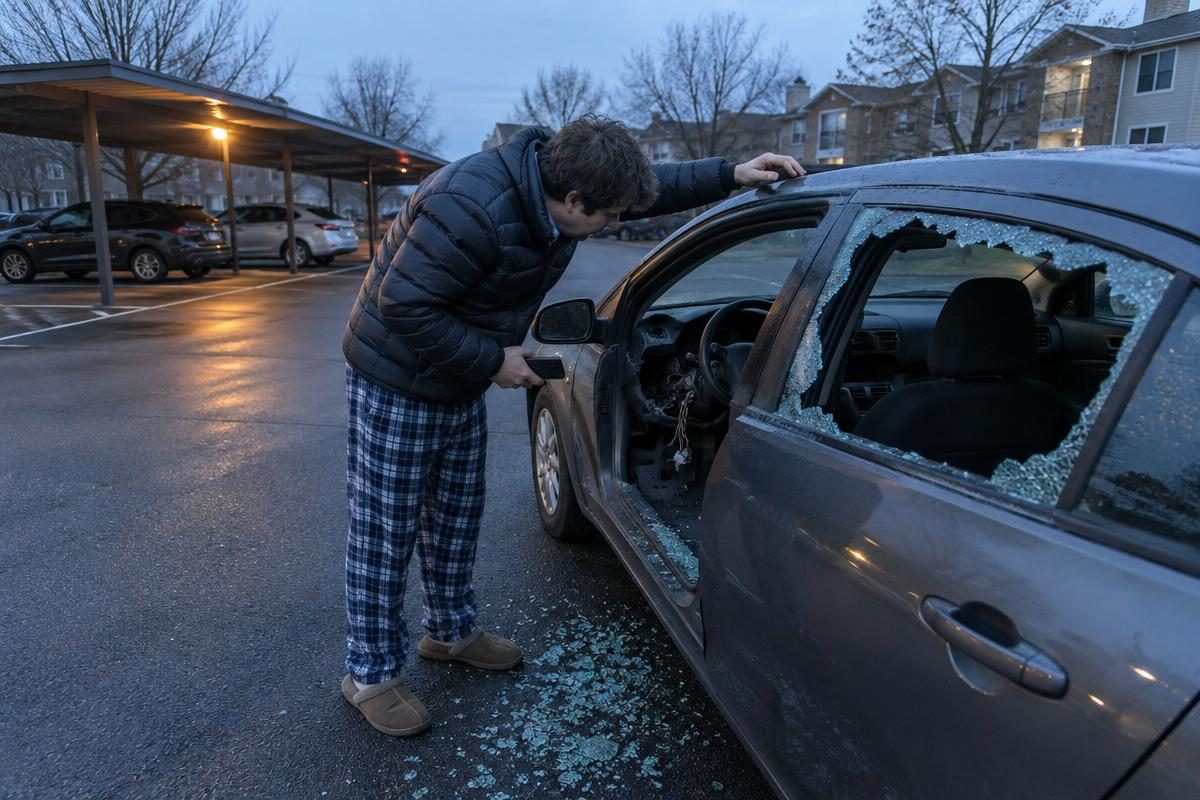
Status Check: Every Class Action Lawsuit Hyundai Owners Ask About
Five groups of Hyundai class action cases matter to drivers right now, and only two of them want a form from you. The rest are either paid out, stuck on appeal, or still at the allegation stage.
| Program | Who it covers | Where it stands |
|---|---|---|
| Multistate immobilizer fund ($4.5 million for consumers) | Break-ins on or after April 29, 2025, car already had the software fix or a booking | Open until March 31, 2027 or until funds run out |
| Airbag control unit (ACU) settlement, $62.1 million | Covered models owned or leased on or before April 14, 2025 | Open until April 8, 2027 |
| $145 million theft class action (MDL 3052) | Thefts before the software fix, claims filed by April 28, 2025 | Approved, payments frozen |
| Theta II GDI and Engine II settlements | Listed GDI and MPI powertrains | Cash claims closed; extended warranties still run |
| ICCU, Palisade airbag, and driver monitoring suits | Ioniq EVs, 2020 to 2025 Palisade, newer camera-equipped models | Filed, no settlement |
We send Sonata owners to the airbag lookup before anything else, because that model turns up in all three settled categories on this page: theft, airbag, and engine.
Stolen After April 29, 2025? File With the Multistate Fund
The multistate immobilizer settlement is a government deal, not a class action settlement, so nobody is enrolled automatically. Pennsylvania and 34 other attorneys general announced it on December 16, 2025. Hyundai Motor America and Kia agreed to pay up to $4.5 million to compensate consumers and another $4.5 million to the states for investigation costs. Kia owners use the same claim site; our Kia settlement page covers their side.
To qualify, your car must lack a factory immobilizer, which is the key-chip system that stops the car from starting without the right key, and must have had the anti-theft software installed (or an appointment booked) when the incident happened. The official list of Hyundai vehicles is Elantra (2011 on), Tucson (2011 on), Santa Fe (2013 on), Kona and Accent (2018 on), all through the 2022 model year, plus Elantra GT 2013 to 2020, Genesis Coupe 2013 to 2014, Palisade 2020 to 2021, Santa Fe Sport 2013 to 2018, Santa Fe XL 2019, Sonata 2011 to 2019, Veloster 2012 to 2017, and Venue 2019 to 2021.
- Pin down the incident date. It has to fall on or after April 29, 2025 and before the earlier of March 31, 2027 or the day your zinc sleeve was installed.
- Gather proof: a police report, your insurer’s loss letter, or receipts for insurance deductibles, towing, and repair costs.
- Submit the form at the official multistate settlement site under penalty of perjury.
- Book the free zinc sleeve, a reinforced ignition cylinder protector, at any Hyundai dealership.
Two catches. Coverage for future break-ins ends the day the sleeve goes in, since the hardware exists to stop them. And the administrator pays compensation on a rolling basis; once the fund is exhausted, later claims get nothing. That makes March 31, 2027 an outer limit, not a target date.
Airbag Control Unit Claim: Open Until April 8, 2027
The ZF-TRW airbag control unit case is the open Hyundai claim most owners miss, because it never made headlines the way the thefts did. Plaintiffs say the module that decides when airbags fire can suffer electrical overstress in a crash and fail to deploy them. Hyundai and Kia deny it, but the court granted final approval on October 8, 2025.
- Recalled Hyundai vehicles: certain 2011 to 2013 Sonata and 2011 to 2012 Sonata Hybrid. Residual payment up to $350.
- Unrecalled Hyundai vehicles: certain 2011 to 2013 and all 2014 to 2019 models of both, Kona 2018 to 2023, Kona N 2022 to 2023, and Veloster 2019 to 2021. Residual payment up to $150.
- Who counts: anyone who owned or leased a covered car on or before April 14, 2025, including people who have since sold it.
The residual payment needs no receipts; it splits what’s left of the fund per capita after out-of-pocket reimbursement claims, so the caps are ceilings. Recall-related expenses such as rentals or towing are a separate claim. Run your VIN on the official ACU settlement site, and expect payment only after the effective date, since the administrator ties distribution to the appeal period.
Why the $145 Million Hyundai Theft Settlement Still Hasn’t Paid
One objector’s paperwork is holding up every check. The case, In re Kia Hyundai Vehicle Theft Litigation (MDL 3052), sits before Judge James V. Selna in the Central District of California. It grew out of social media videos showing thieves starting Hyundai and Kia vehicles with a screwdriver and a USB cord after cracking open the steering column.
- October 1, 2024: final approval. The cash fund is $145 million; the 2023 announcement valued the whole package, software fixes included, above $200 million.
- April 28, 2025: claim filing closed.
- January 8, 2026: the Ninth Circuit rejected both objectors’ appeals.
- May 26, 2026: objector Donald Birner, an attorney acting without counsel, petitioned the U.S. Supreme Court.
- October 6, 2026: the Court returned his petition for defects a second time (the first return followed the May filing, and he resubmitted in late August), with another 60 days to cure.
- October 26, 2026: class counsel at Hagens Berman asked the Court to refuse any further cure period and to hear a properly filed petition at its earliest conference. They gave no estimate for a resolution.
Ignore the $6,125 figure still floating around from the first version of the deal. The revised, approved terms pay up to 60% of the car’s Black Book value for a total loss, the greater of $3,375 or 33% of Black Book value for damage or stolen property, up to $375 for insurance deductibles and increased insurance premiums, and up to $300 for a steering wheel lock or alarm on cars that couldn’t take the software. If you filed, keep your address current with the administrator (1-833-982-3330). For why these gaps drag on, see how long class actions take.
Engine Failure: Recall, Class Action, or Warranty Claim?
A recall is a free repair the automaker files with federal regulators; a class action settlement is a court-approved deal that can add cash and longer warranties. Both Hyundai powertrain settlements stopped taking cash claims years ago, yet their warranty extensions still pay for repairs.
- Theta II GDI (No. 8:17-cv-00838): 2011 to 2019 Sonata, 2013 to 2019 Santa Fe Sport, and some Tucson years. Claims expired August 9, 2021. The lifetime short block warranty still applies if the knock sensor software update was done.
- Engine II (No. 8:18-cv-02223): certain Theta II MPI, Nu, and Gamma engines, including 2014 to 2021 Tucson and 2012 to 2017 Veloster. Claims expired July 8, 2024. Coverage runs 15 years or 150,000 miles for connecting rod bearing failure.
The catch: Engine II coverage requires the knock sensor update before a failure. Skip it, and the dealer can deny the extended warranty. Our advice on any of these claims is to get that update recorded on a dated repair order, because the invoice, not your memory, is what settles a denial dispute. Owners comparing notes with other brands can see how similar warranty extensions work on our GM class action page.
Recalls That Turned Into New 2026 Lawsuits
Four suits filed this year, over three separate problems, argue that a fix didn’t work or that none exists. None has a certified class or a claim form.
- ICCU charging failures: the integrated charging control unit keeps an EV’s 12-volt battery charged. Young v. Hyundai Kefico was filed in New Jersey in April 2026, and Hagens Berman filed in the Western District of Washington on September 23, 2026, covering the 2022 to 2024 Ioniq 5 and 2023 to 2025 Ioniq 6 and Ioniq 9. Each plaintiff says recalls in March and November 2024 didn’t stop sudden power loss.
- Palisade third-row airbags: Steeneck v. Hyundai Motor America (filed February 5, 2026) says a recall failed to fix a defect in more than 500,000 2020 to 2025 Palisades.
- Driver monitoring camera: Ledezma v. Hyundai Motor America (filed September 16, 2026, California) alleges false distraction alerts in the 2024 to 2026 Santa Fe, 2025 to 2026 Ioniq 5, Tucson, and Santa Cruz, and the 2026 Palisade. The complaint cites a January 2025 service bulletin but no recall.
Law firm sign-up forms for these cases aren’t settlement claims. If you’re weighing a lemon law claim or a solo suit instead, our breakdown of whether class actions are worth it lays out the trade-offs, and our Toyota settlements page shows how recall-driven cases tend to resolve.
Start with dates. If your car was stolen or broken into after April 29, 2025, file the multistate claim this month rather than next year, then run every VIN you’ve owned since 2011 through the airbag lookup. If you’re waiting on the older class action lawsuit Hyundai settled in 2024, there’s nothing to file; read how joining a settlement works and check our settlement deadlines list for the payment date once the Supreme Court acts.
Hyundai Owner Questions on Claims and Payouts
Who is eligible for the Hyundai settlement?
For the open multistate deal, owners or lessees of listed models without a factory immobilizer qualify if the car had the software upgrade or an appointment, and was stolen or targeted on or after April 29, 2025. Earlier incidents belong to the closed $145 million class action. The airbag settlement is separate and goes by VIN.
Is the Hyundai settlement claim for 2026 still active?
Yes, two are. The multistate immobilizer claim runs through March 31, 2027 while funds last, and the airbag control unit claim runs through April 8, 2027. The older theft class action stopped accepting claims on April 28, 2025.
When will the Hyundai theft settlement pay?
No payment date exists yet. The settlement can’t take effect until the objector’s Supreme Court petition is resolved, and as of October 26, 2026 it had been returned twice for defects. If he doesn’t file a compliant petition, or the Court declines it, distribution can start.
Does a class action lawsuit Hyundai settled cover a car I already sold?
For the airbag claim, often yes. That settlement counts anyone who owned or leased a covered car on or before April 14, 2025, even if they sold it later. Someone who bought the car after that date isn’t in the class.
How do I join the class action lawsuit against Hyundai?
You don’t sign up. If you fit the class definition you’re already in, and you act when a settlement opens a claim form. The ICCU, Palisade, and driver monitoring suits have no claim form yet.
This page explains public information about cases and settlements involving Hyundai. It is not legal advice; for your own claim or vehicle, talk to a licensed attorney.
Sources
- hkmultistateimmobilizersettlement.com
- attorneygeneral.gov
- topclassactions.com
- acusettlement.com (1)
- acusettlement.com (2)
- hyundaitheftsettlement.com
- hbsslaw.com (1)
- hbsslaw.com (2)
- carcomplaints.com (1)
- openclassactions.com
- money.com
- getoutofdebt.org
- hma-thetasettlement.com
- hbsslaw.com (3)
- hma-e2settlement.com
- hbsslaw.com (4)
- carcomplaints.com (2)
- classaction.org (1)
- classaction.org (2)